


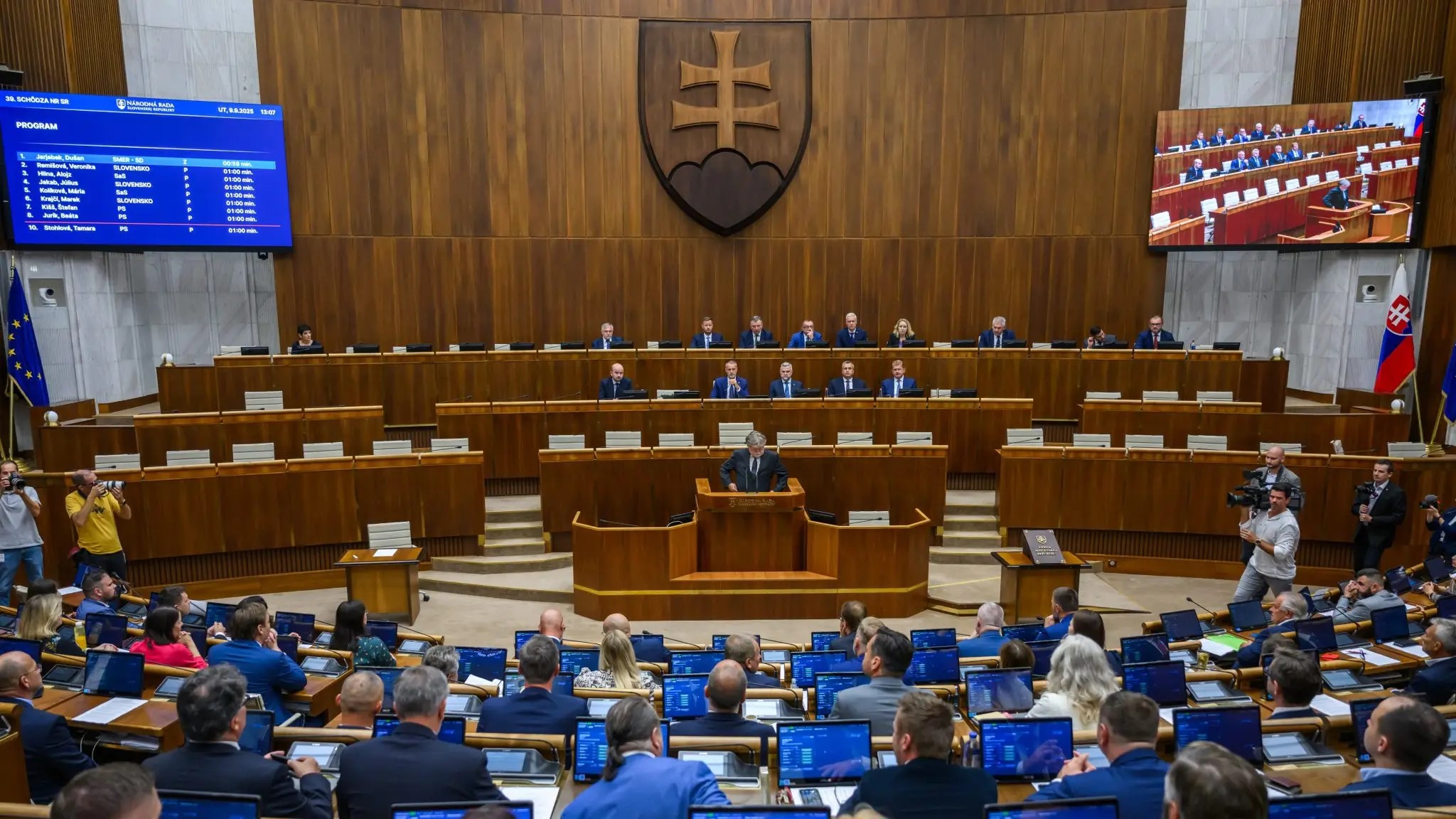
Members of the National Council of the Slovak Republic have adopted a bill that sets the conditions for digital platforms and their workers in Slovakia. The bill will be debated in parliament at first reading on 11 September 2026. The new legislation follows the European directive and brings a substantial change for thousands of couriers and taxi drivers who work through apps such as Bolt, Uber, Wolt and others.
The adopted law is aimed above all at removing uncertainty where work is done as a sole trade (SZČO) but has the features of ongoing employment.
The main changes the new law brings
- Determining an employment relationship. The law introduces automatic recognition of an employment relationship where the work shows the features of dependent work. There are four basic features:
- work in a relationship of the employer’s authority and the worker’s subordination
- personal performance of the work by the worker for the employer
- work according to the employer’s instructions
- work in the employer’s name
- Protection from algorithmic management and mandatory human oversight. Platforms will no longer be able to block a taxi driver’s or courier’s account unilaterally and automatically. Every significant decision to suspend, end a contract or reduce pay must be reviewed, reasoned and confirmed in writing by a named person.
- Disclosure of algorithm principles and decision criteria. Platforms will have to publish the main principles of their automated systems and all criteria by which the algorithm assigns jobs, assesses performance and sets pay.
- Definition and regulation of intermediaries (fleets). The law defines the legal status of intermediaries, known as fleets or partners, through whom some couriers and drivers work. Intermediaries will have the same duties on working conditions and transparency.
- A state register of platforms and intermediaries. An official register of digital platforms and intermediaries will be created. A body that is not entered in this register will not be able to provide its services lawfully or arrange work in Slovakia.
- The right to form trade unions and bargain collectively. The law expressly guarantees platform workers the right to associate, to form trade unions and to be represented in collective bargaining on working conditions and pay.
“Our aim is not to destroy the flexibility of platform work, but to give people in the field real social protection, fair pay and protection from the arbitrary decisions of apps.”
— OZ PDP leadership
The law takes effect no later than 2 December 2026. From that date every digital platform and intermediary operating in Slovakia must fully follow the new rules and adapt its contracts and the operation of its algorithms.